Sunday, March 29, 2009

Too Many Prime Ministers


The General Election 2009 is not dominated by any personality. It is the complete absence of a figure such as Barack Obama, Sheikh Hasina, Indira Gandhi or even an Atal Bihari Vajpayee. We have leaders, but no one who drives popular choices at the national level. There are so many Prime Ministerial candidates in the battle ground of 2009 elections.

On January 24th, 2009, Manmohan Singh underwent cardiac bypass surgery at All India Institute of Medical Sciences, New Delhi. Following the surgery, speculation of alternate PM candidates arose both within the Congress and amongst coalition partners. In an attempt to quell such speculations, Sonia Gandhi announced that Manmohan Singh is the UPA coalition's Prime Ministerial candidate for the 2009 elections. United Progressive Alliance is projecting Prime Minister Manmohan Singh as the Prime Ministerial candidate in the elections. Following the August 2008 confidence vote victory for the current government, Congress is seeing the right person in Manmohan Singh to lead it to the battle field of the 2009 elections. He is having Clean image, better economic knowledge and is acceptable to all, but weak leadership can go against him if Congress couldn't come up as single largest party.

National Democratic Alliance The main opposition, the Bharatiya Janata Party (BJP) and its coalition partners in the National Democratic Alliance, announced that their candidate for prime minister would be BJP party leader Lal Krishna Advani, the Leader of the Opposition. On January 23, 2008, leaders from BJP and other NDA parties convened to officially elect him their candidate. No other party or alliance has announced a prime ministerial candidate. Strong leadership quality is his strength, but less faith of minorities can go against him.

Third Front a motley group of regional parties, as well as the Communist parties, have been striving to form a third front to counter the BJP-led and Congress-led alliances. Among the members are the United National Progressive Alliance, India's Left parties and the Bahujan Samaj Party. Once again, the media has speculated that Mayawati, the chief minister of Uttar Pradesh, could potentially be projected as the front's Prime Ministerial candidate, but no official move has taken place yet. If Mayawati's party can win enough seats, she has openly stated that she would be willing to take the support of the national parties to become Prime Minister. The factor of being a 'Dalit' can go with her. Nationalist Congress Party leader Sharad Pawar has indicated that he is also a possible Prime Ministerial candidate post elections.

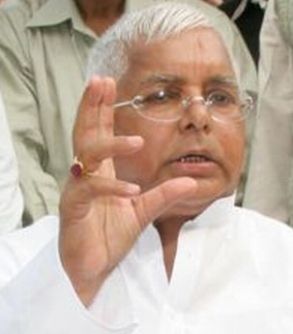
Another possibility arising in last few days could be the 'Secular Front' formed by Lalu Prasad Yadav's Rastriya Janta Dal (RJD), Mulayam Singh Yadav's Samajwadi Party (SP) and Ram Vilas Paswan's Lok Jansakti Party (LJP). Any of them could arise as the candidate for top job depending upon their seats. Lalu and Mulayam is having those 'skills' and experience while Paswan is again a 'Dalit' leader.

Wednesday, March 25, 2009

IPL and we the ppl


Of course, the IPL is not merely a domestic tournament. It is a life-altering phenomenon in cricket. It is domestic only in the sense that it is controlled by the BCCI, which also benefits the most from it; but it has felt like an unstoppable force, with the power to affect every aspect of international cricket. In so many ways, it already has. And that's why the attention of the cricket world has been riveted on the discussions, or rather the lack of them, between the IPL's organisers and the Indian government over the security arrangements.


There was no way the world’s largest and most complex election exercise would not have got priority over a splurge of Twenty20 entertainment. At the same time, the organizers were left with no choice. There was no other space for the tournament in the international calendar, and the cost of not holding it was immense. But with the government refusing to provide a categorical assurance about security, and in fact giving every indication that it would prefer the tournament to be postponed, the risk of going ahead with it in India as scheduled was even greater.

However, this will be the first time a domestic tournament will be held abroad from start to finish. The IPL brought about a revolution in cricket in its first year. Will the second season lead to another? Its relocation is having both, positive & negative aspects.

What we stand to loose:

The relocation is a huge setback for the IPL. It was a tournament founded on the concept of city loyalties, and the finest aspect of the first season, apart from the quality of the cricket, was the response it generated from local fans. The money was made from television, but the real success of the tournament was felt in the stands. Taking the games away would be to deny them their natural habitat.

India would have showcased its higher security prospects and thus would have created positive environment to organize high profile sports events such as commonwealth games, Asian games and cricket world cup which is hit by recent terror activities in the region.

BCCI has been said to loose Rs.200 crores due to its relocation. At any given point of time, IPL would have 10,000 people working on the tournament. They would have consuming 30,000 rooms in hotels and 10,000 airline tickets for the purpose of the tournament, India stands to loose it.

As a positive,

it might provide a template for, and hasten the process of, Pakistan's home games being played in England or elsewhere. And if the tournament succeeds beyond drawing eyeballs on television, it could end up expanding the IPL's base and providing a tangible alternative for all subcontinent teams in these uncertain times. Even the most loyal Indian supporters will agree that these parts are far more chaotic and inherently prone to security lapses than the developed nations. The bombings in London in 2005 were an exception.

Lalit Modi, the IPL commissioner, has said the South African economy will benefit enormously from staging the lucrative Twenty20 tournament. Speaking at a press conference in Johannesburg, Modi suggested the influx of players, coaches, support staff, media and spectators would inject many millions into South Africa over the league's five-week duration.


Gerald Majola and Lalit Modi at a press conference, Johannesburg, March 24, 2009


But in the end it is as inconceivable to think of cricket without India as it is to imagine India without cricket. Not only is India cricket's economic powerhouse, but despite all the flaws of its administrators and the excesses of its fans, nowhere else is the game more alive, more vibrant, and followed more passionately. The IPL happened to get its timing wrong, but for its own sake, cricket must return home.

Sometimes a controversy ends well, and this is one of those. No major bruises, though the Congress is left looking a bit sheepish. When the first ball of the second IPL is bowled, cricket aficionados in the country will be saluting Modi, Pawar and Jaitley.

Monday, March 23, 2009

Nano wheels hit Indian roads

Tata Nano, the world's cheapest car with a huge following, made its commercial debut on Monday but the Rs 1,00,000 price tag that drove it to fame may not stay for long.

From today onwards, the product will be available in the showrooms. There will be three versions - the base version , which is the one Tatas promised to the people of India and two upper tier versions. But u have to pay more if you want a Radio, an A.C. or other facilities in your car for the base version.

According to market research firm Crisil, Nano's price reduces the cost of ownership of an entry-level car by 30 per cent and to below three times the cost of owning a motorcycle. "This will make the car affordable to an additional 14 million families, including a section of 58 million two- wheeler owners," Crisil said.

While the Nano will not affect the other compact cars in the market, it will create a new segment of buyers, mainly those who want to upgrade from two-wheelers to four wheeler.

But it remains to be seen the people's interest in it,when the market is very low and people are losing their jobs due to recession and much of them are forced to sell their cars due to less income, no one can predict about the future of the Nano.

Also the environment related issues are with it, at the same time when Indian roads are full and blocked with the traffic, is it wiser to put 1 million new cars on the Indian roads?

http://www.tatamotors.com/

Saturday, February 21, 2009

Of the ideas of the west by the west for the west

That's what I want to say about "Slumdog Millionaire". Well even Satyajeet Ray has showed the poverty and backwardness of India but through characters not through caricature what we see in SM, all exaggerated images of our slums, riots, underworld, child labor, begging etc. You can't find a single positive in it for India. Had this film made by an Indian director, it would've been trashed immediately. These all things made for a viewing pleasure of a First world audience. I'm not against making a 'Chaalu Bollywood Movie' and earning money but I'm against the hype and awards it is getting.

Of course, it is a matter of pride for every Indian that Rahman has secured three Oscar nominations, but is his music in SM his best performance? Has he not scored musics a hundred times better in Indian movies? Why did he not get an Oscar nomination for them? Because they were original Bollywood movies? And why co-director Loveleen Tandon who is an Indian has not been co-nominated for the Oscars?

All I can say that this movie shows India from west's point of view or from the angle through which they want to see India. Same as we all Indians see USA as 'Land of dreams'. so we choose to watch only those films from Hollywood which show crashing cars, superheros, sizzling technologies & much of nudity. We never love to see homeless blacks or millions spending their day & night in a single car or cheep African labors in US or UK. Similarly the audience of west would love to see films about India which shows slums, riots, Mafia gangs, poverty and backwardness which conform to their image of third world.

I feel it fails to present a balanced account of the life of a slum dweller in India. Dharavi's long history of immigration has created a creative and productive crucible for producing the best and worst in human nature. It fails to recognise the communal harmony among 800000 people of Asia's biggest slum.

I'm angry with some of its dialogues, scenes and mistakes which specially heart the image of India. For instance when the tour car was looted and the boy was severely beaten up by the owner the boy says "Sir, It's real India". Then the man comes to help him and says"you have seen real Indians now you see the real American" and gives him some money; as if all the Indians are thieves and all the Americans are the greatest donors or helpers. They have changed the name of the lead character from Ram Mohammad Thomas (in Vikas Swarup's Q&A) to Jamal Malik to simply showcase the Hindu Muslim riots. Never anyone tries to loot the 'Chapati' in running train as shown in the movie let alone the childes. And to suit the script they changed the name of writer of "Darshan do Ghanshyam" from Narsi Bhagat to Surdas.

If a director knows this little about India then what can be expected from him? Amitabh Bachchan was hundred and one percent correct when he said "it's not a great movie, Bollywood have made many movies better than this."

Friday, January 30, 2009

ON 2nd OCTOBER

Today I watched the movie 'GANDHI'. I started it watching after interval and couldn't stop me watching the entire movie.You simply can't think of about the greatness of the man who was voted as the 'Man of the millennium' just after Albert Einstein by the Time magazine in 2000 or who has voted as the 'Best icon of the India' of all times by NDTV recently. i was simply thrilled when, I watched millions of people walking behind him in a scene of the movie on 'Dandi march'. Its a different kind of feeling to actually feel how a simple man rooted out the 'British empire' from India without any violence by means of truth (Ahimsa & Sayagraha). When he was on hunger strike, violent riots all over India simply stopped for the improvement of his health. Such was his image among the people of every religion, cast and creed. He is loved by all sections of the people of this country ant the world.